Habitats: Enterprise infrastructure for AI+Human coordination

Arkology Studio began as an investigation into how information technology could serve—and express as—living systems.
We saw information networks as ‘alive’, not in the strict biological sense, of course, but in the way cybernetics might ask: does the system self-regulate? Does it adapt to changing circumstance? Is it reflexive? These are questions about structure and dynamics. Which expressions lead to greater entropy and which to coherence?
As AI finds its way into our lives and psyches in the form of ‘chatbots’ and 'generative models', we must continually ask to what end and what shape this most recent inflection of information technology ought to take. Nothing is pre-determined and it is all of ours to steer, but the tide is rising and the economic logics of modernity is ushering in AI whether we want it or not, and it will profoundly change us.
Sophisticated 'information-processing-machine' or 'animist-spiritual-technology'? The former continues in step with a long line of materialist (now ‘computationalist’) conceptions of the universe. Scientific, practical, heady. The other, in resonance with indigenous cosmologies of a universe imbued with agency and meaning. Playful, unwieldy, hearty. Both frames reveal an aspect of AI that is real and which is expressing itself today depending on where you look and how closely you pay attention.
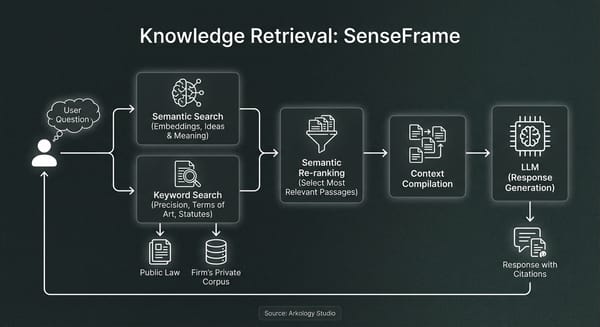
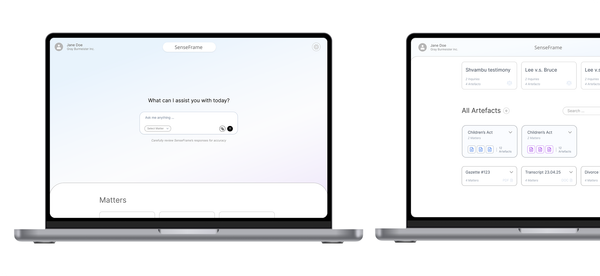
Since ChatGPT first launched at the end of 2022, we've invested a lot of time into understanding AI: how to work with it internally but also how to build it. We’ve tested and deployed across multiple LLM stacks, built AI services for legal firms, designed agents to navigate distributed knowledge networks and written production-grade software with agentic coding.
We've seen first hand what AI steered in the right manner can do.
Here are some revealing, first-hand observations:
1) Software development is essentially free (and fast)
Earlier this week, we created and deployed a studio-quality website in under an hour. Yesterday, I scaffolded a complex software suite in a single day with Codex 5.3.
Consider what this means. Any conceivable application can now be created with a $20 Codex or Claude Code subscription. Organizations can spin up 'apps' and custom dashboards on the fly to suit their nuanced processes and objectives, simply by describing them.
Yes, having an understanding of software architecture and being able to steer coding models still matters greatly – and there's a big difference between scalable, production-grade software and your weekend vibe-coded app. The point is that software is now cheap to create, and the space and time between idea and execution is collapsing to zero.
2) AI Agents are now capable of performing almost any 'knowledge work'
The Anthropic team realized this early on: give an AI coding agent a sandbox (i.e. computer, workspace and internet connection) for it to scratch around in and it can pretty much complete any task you throw at it (If you're interested in an overview of the patterns that make these agents really fly, I wrote about effective agent design in a recent blog post):
✔️ Compile and file my taxes
✔️ Plan business trip to Singapore
✔️ Create budget forecast
✔️ <any task you currently use a computer for>
What we've found in practice is that these kinds of knowledge agents empower our team by freeing us from low-level and administrative tasks. i.e. we get to hang in creative space!
The best teams will be those that learn how to effectively coordinate teams of agents toward a given objective. Not unlike working with other humans, learning to be effective with AI is about learning how to communicate and relate to them. It's about learning their behaviours and individual nuances.
Perhaps the best analogy is that of a conductor in an orchestra. The conductor is the central coordinating intelligence — shaping interpretation, synchronizing dozens of musicians, and translating the score into a unified performance. Her physical movements may be small, but the outcome is everything but. The orchestra becomes an extension of the conductor, as too does it become an extension of the individual musicians. A unified assemblage organized through the language of music.
3) Organizations will be structured around intelligence
What will matter over the next few years is, not your headcount, but how well your organization can orchestrate AI + Human teams.
This dynamic fundamentally changes the structure of an organization. It will look less like a hierarchy of employees and more like a layered cognitive system, a space within which humans + AI collaborate toward shared goals.
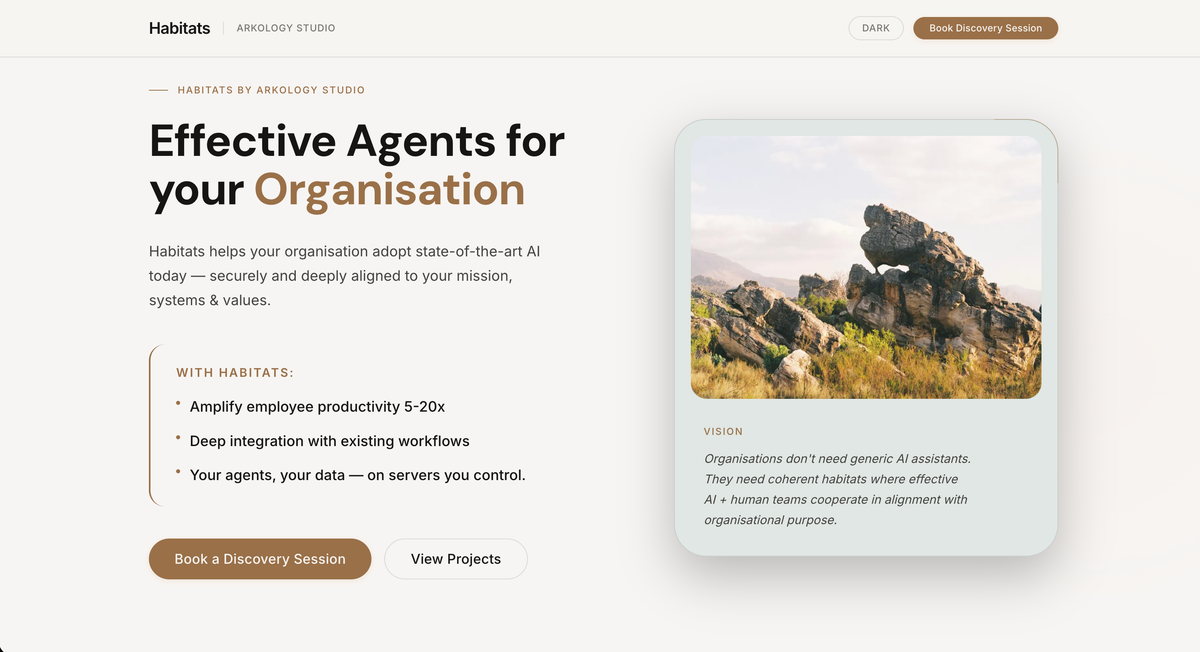
That’s why we created Habitats.
Habitats are digital environments where humans and agents cooperate effectively and in alignment with organizational purpose.
We've take everything we've learnt about AI, production-software and knowledge ecosystems over the past 7 years and turned it into a simple, effective system for integrating AI into your organization today.

Our approach empowers human teams by integrating directly into existing workflows and platforms you already use (e.g. Slack, MS Teams, Google Workspace, etc.), and leaning on a library of secure, white-listed 'agent skills': capabilities that support any knowledge-based work within your organization.
We’re already using Habitats within our own organization to coordinate teams of agents in Discord/Slack and over Signal. Through ongoing interactions they learn our ‘tribal knowledge’ and nuanced workflows, while having permissioned access to documents, projects and meeting notes. They can schedule meetings, flag and summarise important emails, and perform research while we sleep. Every day, we discover and build new capabilities that streamline our organizational processes so that we can focus on what matters.
Habitats is ready for your team today. We have space for 3 more organizations this year to join our pilot program. If you’re interested in your own organizational Habitat, please reach out to me or to a member of our team to book a free discovery call.
This post was written by Ross Eyre, Co-Founder at Arkology Studio